Posts

Iran’s Execution Machine Is Running at Full Speed

Image
  By Struan Stevenson As diplomats debate ceasefires, nuclear agreements and regional security, another crisis is unfolding inside Iran with alarming speed. While global attention remains fixed on war and negotiations, the clerical regime has launched one of its most extensive campaigns of political executions and repression in recent memory. Young protesters, political activists, students and opposition supporters are being sent to the gallows while much of the democratic world remains distracted. The surge in executions should be a matter of grave concern for every civilized nation. Instead, silence prevails as governments hold their breath, waiting for the latest twist in Donald Trump’s on-again, off-again peace initiative and hopes of an end to conflict involving Iran. Meanwhile, Tehran’s rulers are using the cover of international distraction to intensify their campaign of terror against their own people. Between March and early June alone, at least 32 political prisoners were...

IRGC Designation Sends Iran Regime Into Freefall

Image
By Shahriar Kia When the US designated the Islamic Revolutionary Guards Corps (IRGC) as a Foreign Terrorist Organization (FTO) last week, it was a major milestone for the Iranian Regime and now the different factions of the Regime have a new angle to deal with international issues, like the Joint Comprehensive Plan of Action (JCPOA) and the Financial Action Task Force (FATF). Now the debates over these matters have reached a new level. Heshmatollah Falahatpisheh, the head of the Parliament’s security committee, criticized the EU’s approach toward the FATF bills, which Iran has been asked to ratify, complaining that European countries offer “hopeful gestures” rather than “tangible result[s]”, but failed to see how Iran could escape the sanctions without Europe’s help. Earlier this month, the French ambassador to the US spoke about a potential compromise between the EU and the US over the JCPOA, which could include adding Iran’s missile program and regional meddling. This dre...

Can Iran Regime Close Busy Shipping Waterway?

Image
By Mohammad Sadat Khansari The Iranian Regime has  threatened  to close the world’s busiest shipping lane in response to the US decision to remove the sanctions waivers on the country from May 2. On Monday, Secretary of State Mike Pompeo vowed that the US would not extend sanctions waivers on eight countries – China, India, Japan, South Korea, Taiwan, Greece, Italy, and Turkey – who had been allowed to keep buying Iranian oil after the sanctions snapped back last November. The sanctions came into force after the US withdrew from the nuclear deal, citing Iran’s violation of the UN resolution surrounding the deal. What did Iran Regime do? Alireza Tangsiri, a commander in Iran’s Islamic Revolutionary Guard Corps (IRGC), which was recently designated a terrorist organisation by the US, vowed that they would block off the Strait of Hormuz, severely impacting the flow of goods, especially oil. This would make shipments more dangerous and more expensive. Tangsir...

No Grace Period for Iran Oil Sanctions

Image
By Jubin Katiraie The US vowed to eliminate in May all waivers granted to eight countries that allowed them to keep buying Iranian oil from November 2018 as part of the US campaign to increase pressure on Iran by cutting off their oil revenues. Secretary of State Mike Pompeo said Monday that the US wanted to reduce Iranian oil exports to zero and had no plans to give any of the countries involved a grace period to comply with the sanctions. He said: “Today I am announcing that we will no longer grant any exemptions. We are going to zero. We’re going to zero across the board.” These sanctions are aimed at convincing Iran to end its nuclear program and its support for terrorist proxies. The US reimposed sanctions after Donald Trump withdrew from the nuclear deal, which he called “the worst deal ever”, last May. In the past year, Iran’s exports have fallen from over 2.5 million barrels per day to less than 1 million bpd. US envoy for Iran Brian Hook said that conditions in ...

Iran Regime’s FATF Division Develops

Image
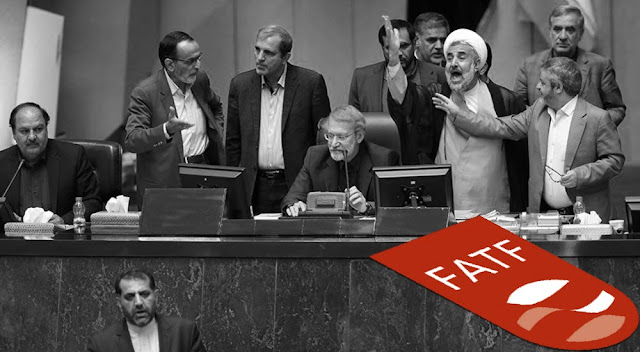
By Hamideh Taati The Iranian Regime’s infighting over the bills related to the Financial Action Task Force (FATF) had already escalated to dangerous levels before the US State Department placed the Islamic Revolutionary Guards Corps (IRGC) onto its lists of Foreign Terrorist Organizations (FTO). Now, the disputes have reached a much more serious level and the passage of these bills represents a decision that will impact on Iran’s current power structure and international relations. For months now, the two bills that still need to be passed, in order to Iran to join the FATF and receive all the economic benefits that brings, have been going back and forth between the Parliament, the Guardian Council, and the Expediency Council. But the Regime appears stuck at a crossroads unsure which way to go. The state-run Etemad online website wrote that the saga had become such a “tortuous odyssey” mired with “political controversies and their interpretations” that the FATF itself...

US TAKES MAJOR STEPS TOWARD “MAXIMUM PRESSURE” ON IRAN, BUT UNCERTAINTY LINGERS

Image
By Edward Carney The White House announced on Monday that it  would not be renewing sanctions waivers  for any of the eight countries that have been importing Iranian oil while also doing business with the US over the past six months. Secondary sanctions on Iran’s oil exports went back into effect last November, six months after President Donald Trump announced that the US would not be remaining a party to the nuclear deal that was signed between Iran and six world powers in 2015. The Trump administration initially suggested that it would not be granting any waivers to the re-imposed sanctions, as the previous administration had done. But Trump relented on this issue at the last moment, apparently out of fear that the immediate application of “maximum pressure” would drive up global oil prices. It was widely expected that the president would come to the same conclusion again before the first round of waivers expired at the beginning of May. Many analysts suggested t...

Iran Regime Spends over Two Times Its Budget on Subsidies

Image
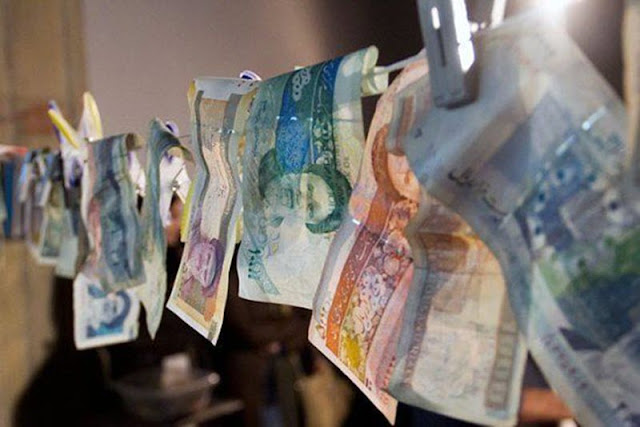
By Mahmoud Hakamian The Iranian Plan and Budget Organization (PBO) has said that the Regime will spend more than two times the government’s budget on hidden and direct subsidies in this financial year. The PBO said that Iran is estimated to spend 8,900 trillion rials (or $63.7 billion, based on the current USD exchange rate on the open market) on total subsidies, which is 2.2 times the government’s budget, during the current fiscal year of March 21, 2019, to March 20, 2020. If we based the exchange on Iran’s artificial exchange rate, which was fixed in April 2018, the amount in dollars would be at least three times higher. The subsidiaries Roughly a third of the subsidies are paid directly from the government budget and state-run financial entities. These are cash subsidies and include things like financial aid to the agricultural and industrial sectors. Two-thirds of the subsidiaries, which equates to about 6,490 trillion rials ($46.35 billion), are hidden. This m...

IRGC; Iran Regime’s Main Apparatus Of Terrorism And Suppression

Image
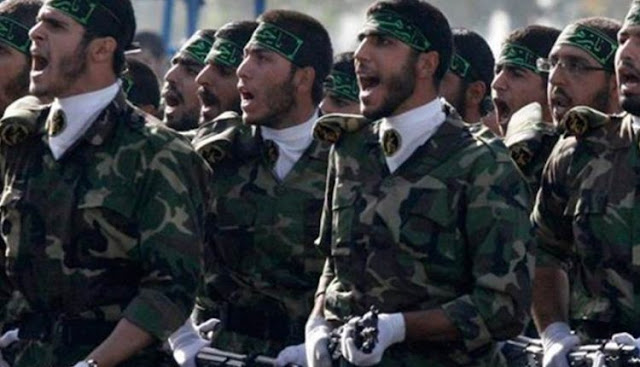
IRGC; Iran regime’s main apparatus of terrorism and suppression By Ali Latifi Nowadays, the international community is well aware of the devastating consequences of the Islamic Revolutionary Guard Corps’ (IRGC) meddling in the Middle East, as well as its crimes, including providing financial support and weapons for acts of international terrorism. The war in Syria, Yemen, Iraq, supporting Lebanon’s Hezbollah and other terrorist groups in the world is only part of the IRGC’s malign activities. The IRGC trains and arms terrorist groups to foment proxy and civil wars in the region. The IRGC is the cruelest force of the Iranian regime; actually, it is the main means of preserving the totalitarian mullahs, via terror and crime. The IRGC is responsible for the repression of labor protests, popular uprisings, the arrest and torture of the political dissidents in its secret prisons, and the reconnaissance and assassination of political and cultural opponents inside and outside t...